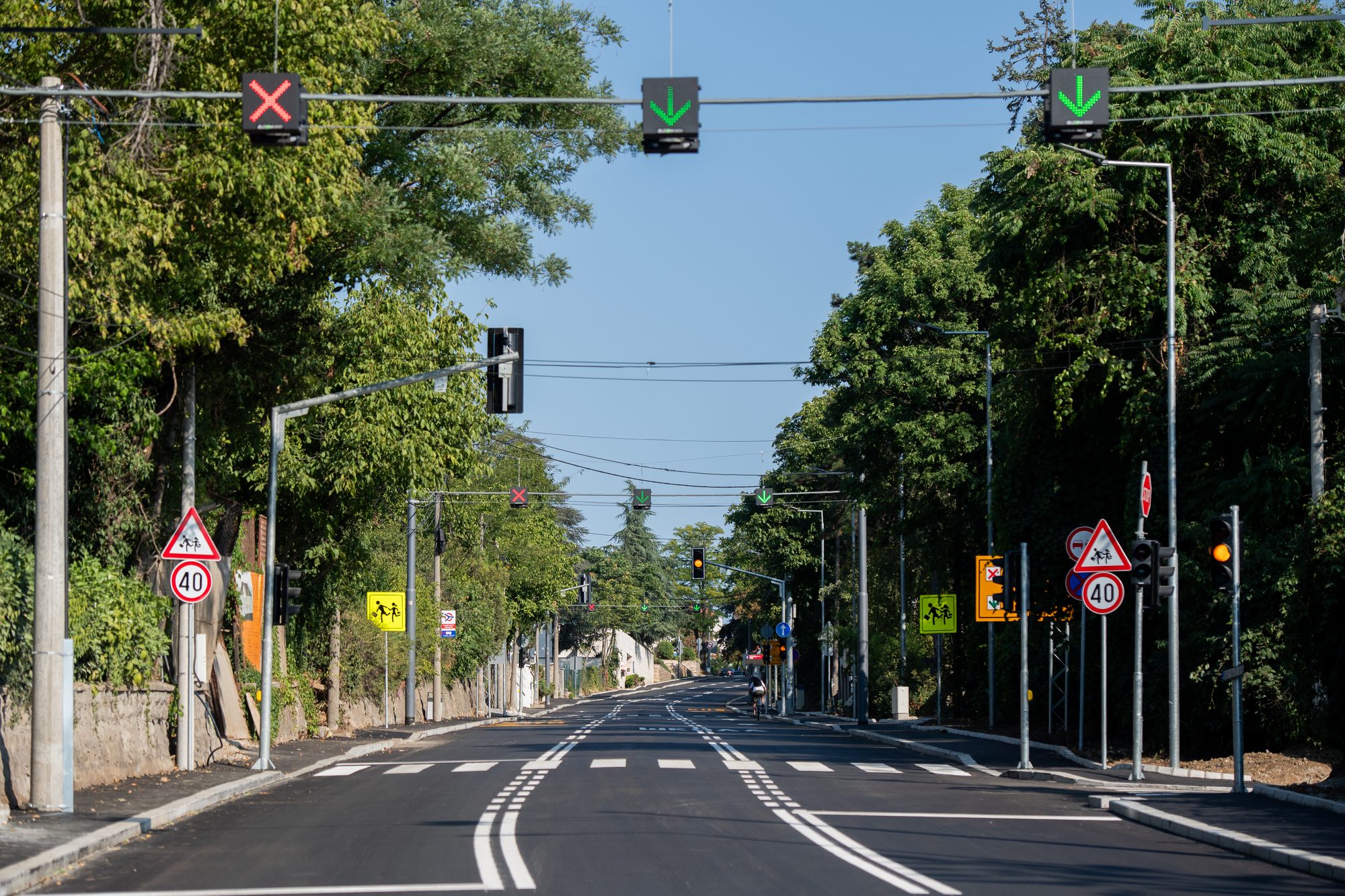
Fuzzy logic
Compares vehicles waiting in the active and conflicting phases and applies 25 rules written by an engineer.
Result: 5–8% less delay than the baseline algorithm, every hour.

The traffic light that learns by itself.
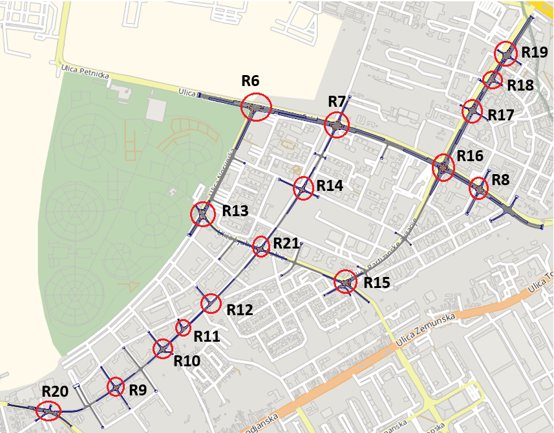
Elcom has developed two AI methods that decide, every second, whether to extend the current green phase or move to the next one — while safety stays defined by the signal plan. Both were tested in calibrated SUMO simulation models of two real intersections, in Kragujevac and Belgrade.
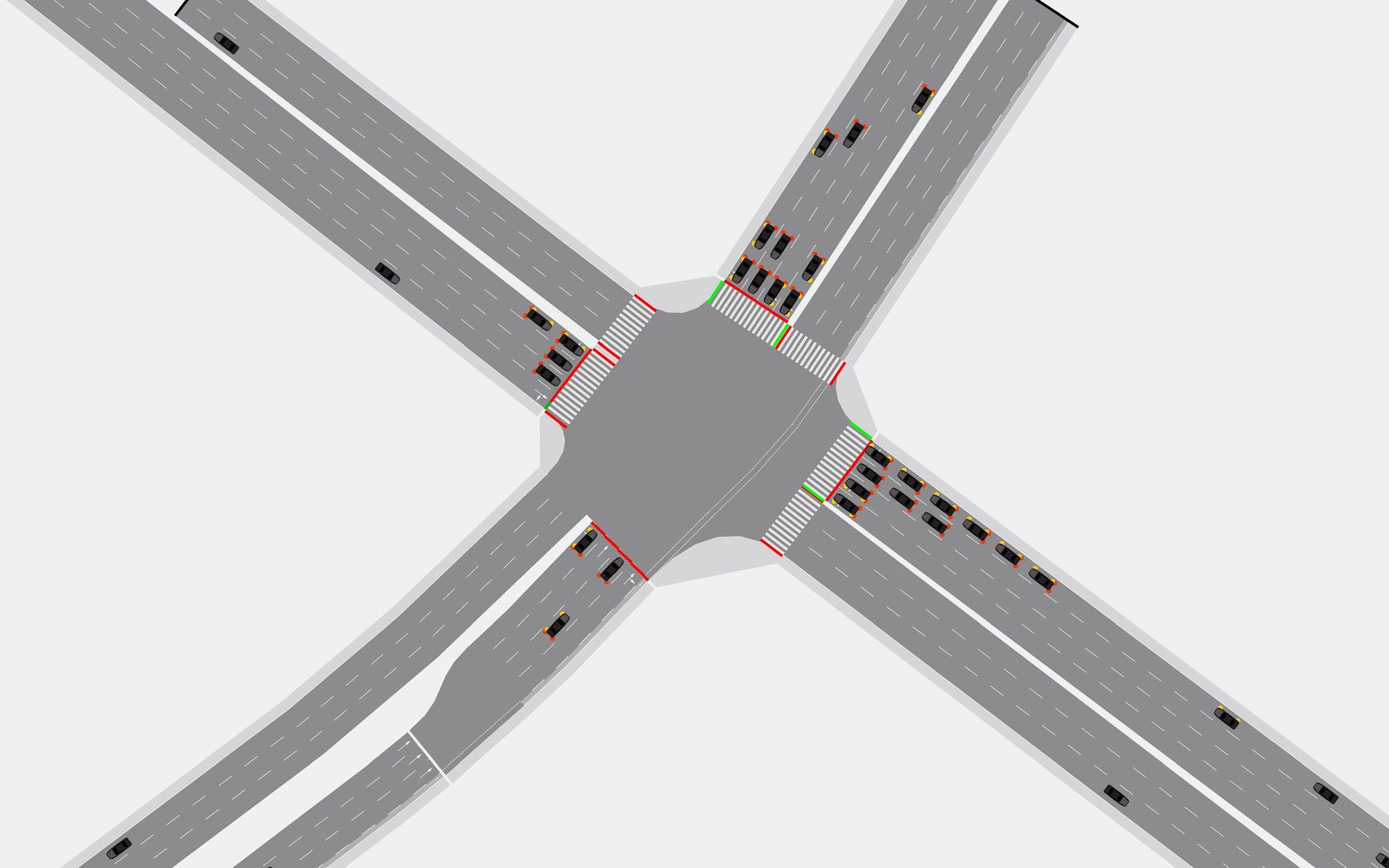
Compares vehicles waiting in the active and conflicting phases and applies 25 rules written by an engineer.
Result: 5–8% less delay than the baseline algorithm, every hour.
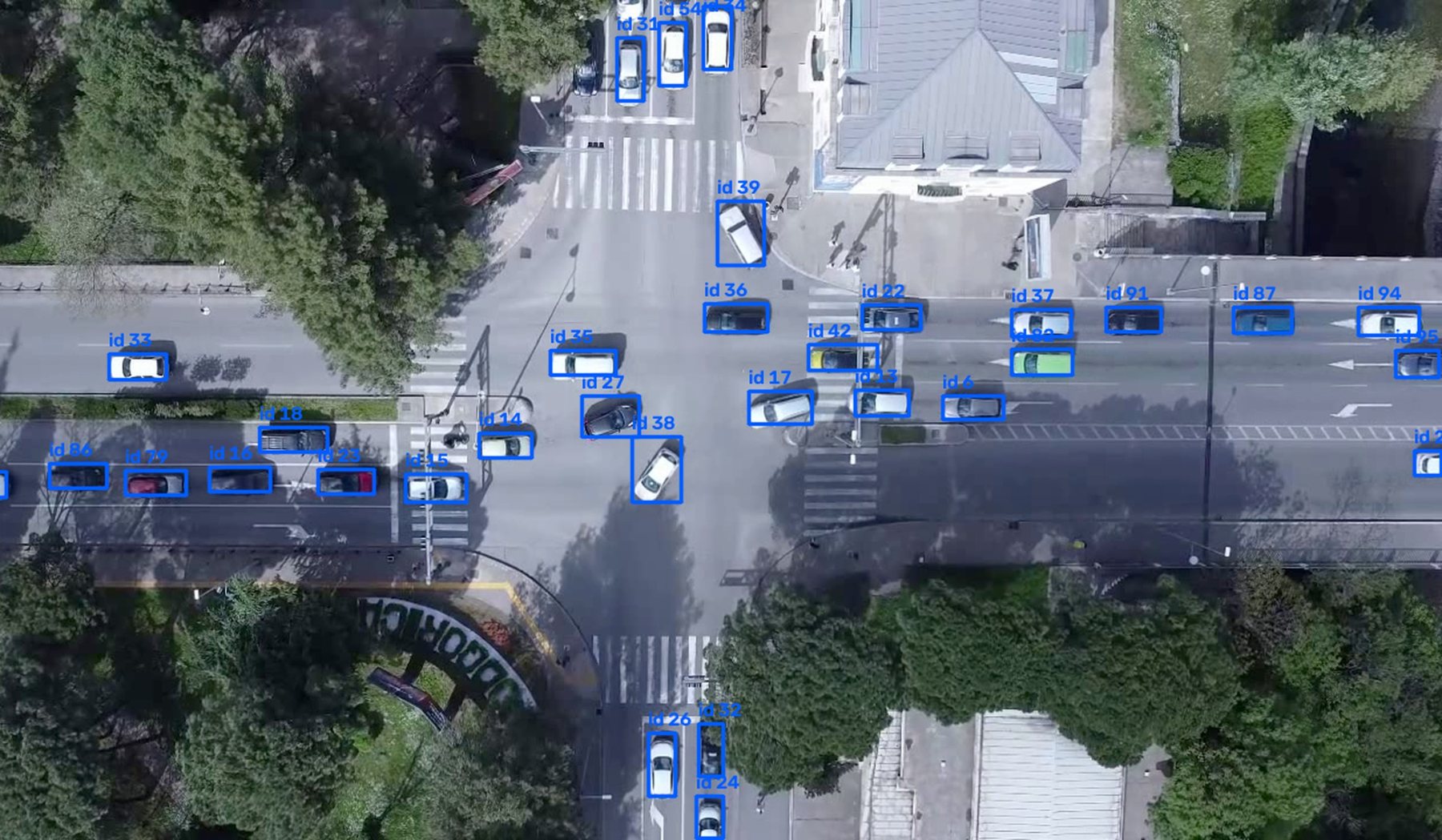
A neural network analyses every lane each second and decides to extend or end the phase. It trains itself inside the simulation.
Result: 7–12% less delay than the baseline algorithm in daytime.
Calibrated SUMO model, average of 10 runs.
The Transformer was trained only on one demand pattern (2,715 vehicles/h, volume randomly varied between 0.05× and 2×). It performed best in three real hours it had never seen. At a second intersection in Belgrade (Bulevar Vudroa Vilsona / Nikolaja Kravcova), retrained with 24 inputs instead of 8, it was best at night (35% less delay than the baseline algorithm), at the afternoon peak and under saturation (31%).
Reinforcement learning (PPO): about 4,300 learning cycles, around 15 hours of autonomous computing. The system only chooses the moment to switch phase. Requirements: a detector on every lane and a good SUMO model.
All results come from calibrated SUMO simulation models; average delay per vehicle over 10 runs.