Intelligent activation
Detection by the video detector triggers a dynamic light pulse when pedestrians are present.

Warnings that drivers don't learn to ignore.
A camera recognises a pedestrian before they step onto the road, and only then switches on the amber LED flashers, the sign's internal lighting and the crossing's LED lighting. Drivers are warned only when someone is really there. It works day and night and tells people apart from vehicles, bicycles, animals and static objects.
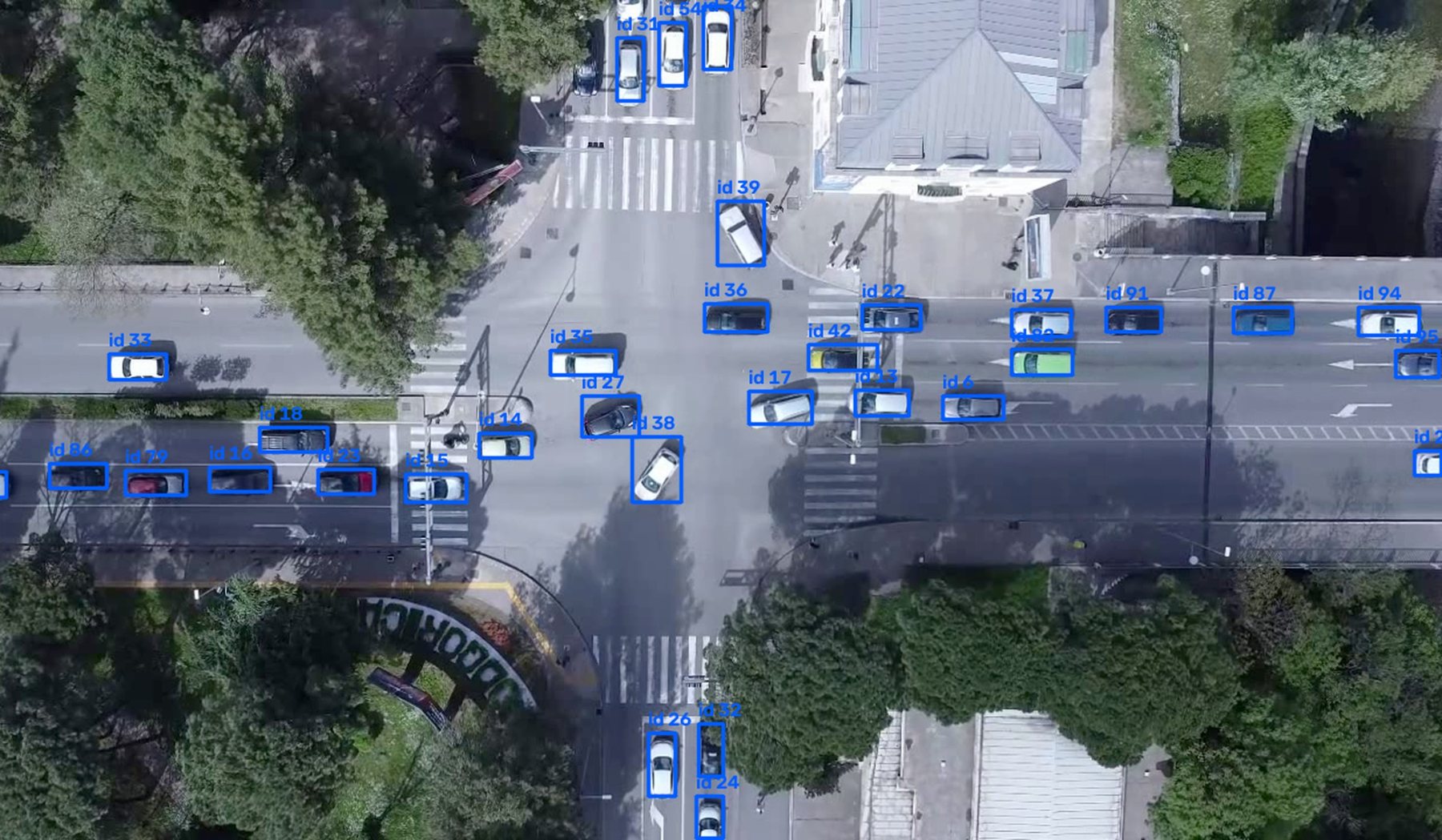
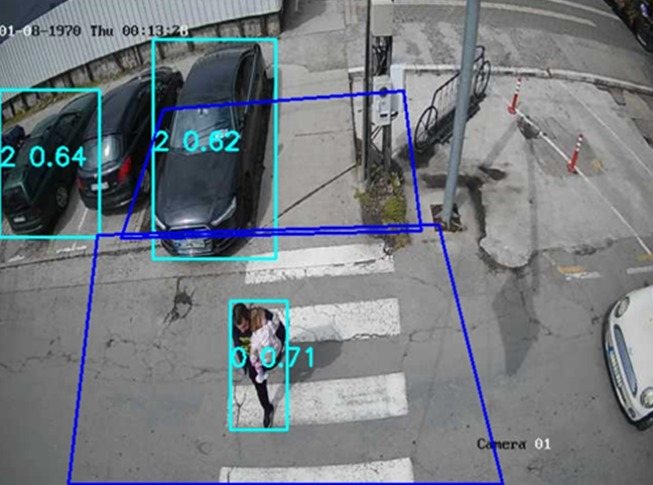
Neural-network software watches the approach zones and the crossing and recognises a person in real time.
As soon as a pedestrian is present, the amber LED flashers and the sign's internal lighting switch on.
Lighting is boosted only on the zone where pedestrians and vehicles meet.
Every detection is logged: pedestrians per hour and per day, peaks and activations, as data for safety analysis and planning.
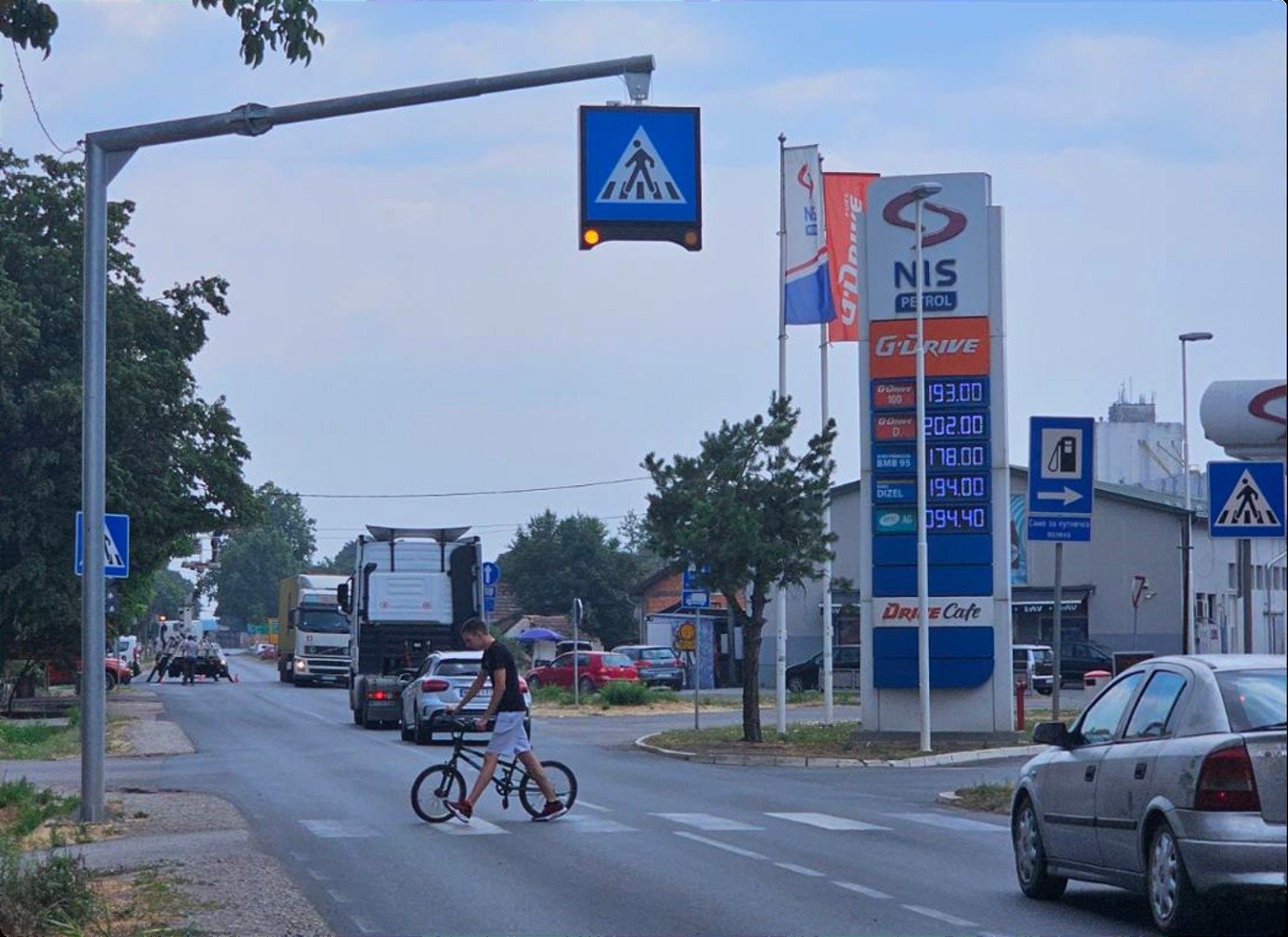
Amber LED flashers, LED lamp lighting the crossing and the sign's internal lighting.
On only while the system detects a pedestrian on the approach or on the marked crossing. The light pulse is active only while a pedestrian is present; the sign's internal lighting and the LED crossing lamp stay off.
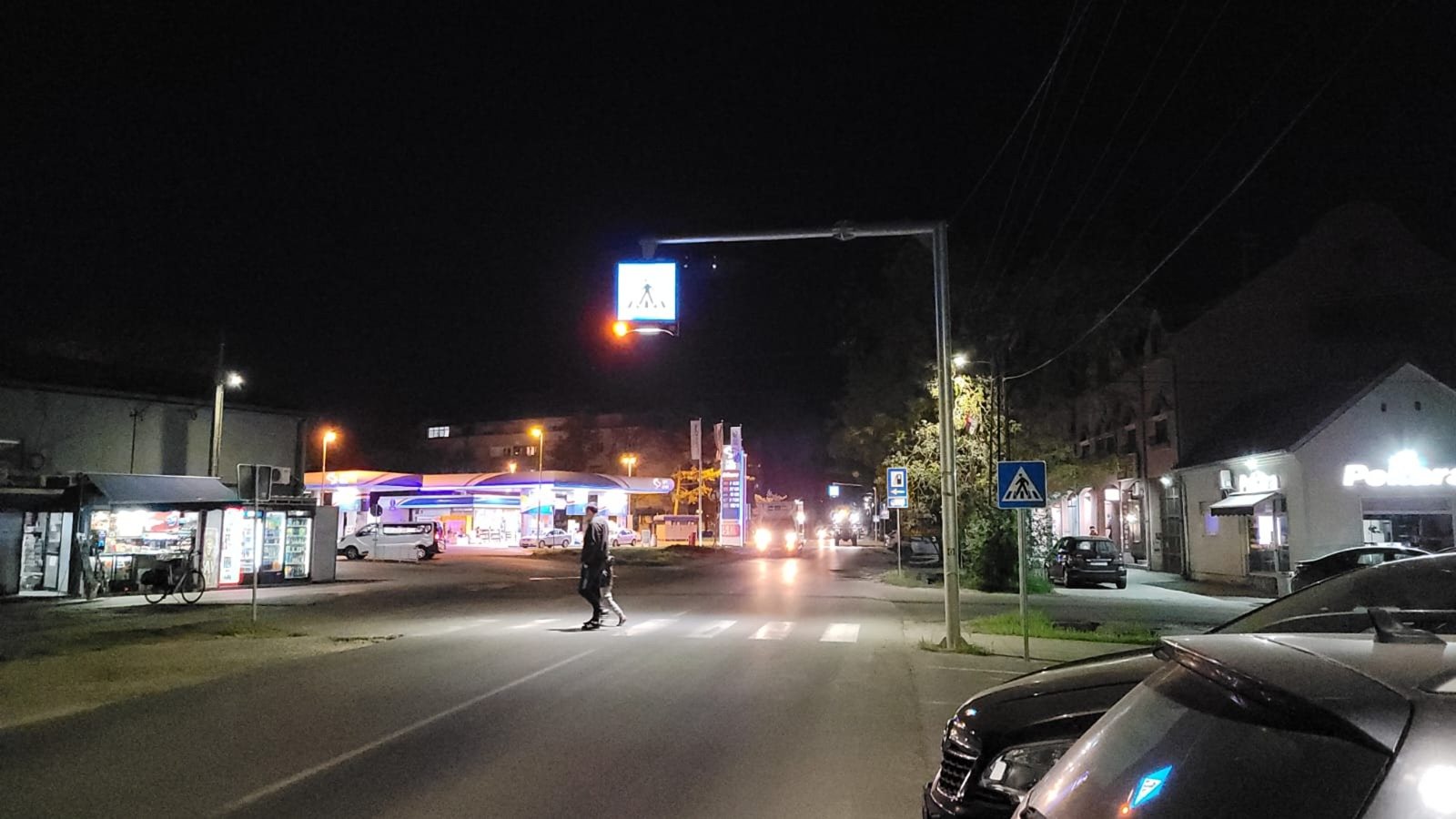
Detection by the video detector triggers a dynamic light pulse when pedestrians are present.
The internally lit sign and amber LED flashers make the crossing as visible to drivers as possible.
LED lighting draws attention to the crossing and its approach zones.
Drivers are warned in advance about high-risk zones, so they can react in time.